
Todėl tikime, kad reikia skleisti informaciją apie Ruby ir įrodyti, kad tai vertinga technologija. Žinoma, nepamirškime ir jos trūkumų, nes tobulų technologijų nebūna. Kiekviena jų turi kažką, kuo išsiskiria iš kitų, ir tam tikrų savybių, kurios ne visada gerai veikia.
Pradėsiu nuo privalumų.
Ruby programinės įrangos kūrimo privalumai #1: Laiko efektyvumas
Tai vienas didžiausių šios programavimo kalbos privalumų. "Ruby" kartu su "Rails" sistema leidžia palyginti greitai kurti programinę įrangą. Manoma, kad Ruby yra viena iš efektyviausiai laiką naudojančių kalbų rinka. Tokį teiginį galite išgirsti iš daugelio Ruby on Rails (RoR) rėmėjai. Žinoma, tai subjektyvi nuomonė, tačiau joje neabejotinai yra daug tiesos.
Yra priežasčių, kodėl "Ruby on Bėgiai noriai renkasi startuoliai, kurie nori greitai sukurti savo produktas. MVP (Minimum Viable Product) metodas taip pat dažnai siejamas su "Ruby" ir "Rails. Galima išgirsti teiginį, kad tai puiki technologija tokio tipo gaminiams kurti.
"Ruby" privalumai: #2 Gerai išvystyta "Ruby" bendruomenė
"GitHub" - tai vieta, kurioje sutiksite daugybę "Ruby" kūrėjų. Jie sudaro plačią bendruomenę, kuri taip pat didina šios programavimo kalbos patrauklumą. Šiuos fragmentus, geriau žinomus kaip "brangakmenius", galite lengvai naudoti kaip pagrindą savo projektams - sutaupytą laiką galėsite skirti sudėtingesnėms ir svarbesnėms užduotims.
Be to, "GitHub" nuolat auga "Ruby" kūrėjų bendruomenė. Visi jie yra labai aktyvūs, o tai turi didelę įtaką būsimam šios kalbos kūrimo galimybių suvokimui.
"Ruby" privalumai: #3 Naudingi įrankiai ir bibliotekos
"RoR" yra atvirojo kodo sistema, pagrįsta duomenų bazėmis pagal MVC (Model-View- Controller) modelį. Kasdien ją naudojantys programuotojai giria jos paprastumą. Iš tikrųjų duomenų bazė ir žiniatinklio svetainė serveryje yra daugiau nei pakankamai, kad būtų galima paleisti programą. Dėl DRY (angl. Don't Repeat Yourself) taisyklės kūrėjai vengia kartoti tą patį darbą įvairiuose taikomosios programos kūrimo etapuose, o tai labai pagreitina jų darbą.
Nereikėtų pamiršti dar vieno svarbaus "Ruby" metodo - Konvencijos per konfigūraciją. Jis numato, kad būtina konfigūracija bus sumažinta iki minimumo, pakeičiant ją paruoštais modeliais.
Ruby on Rails skatina naudoti žiniatinklio standartus, gerąją inžinerinę praktiką ir projektavimo modelius.. Jį galima lengvai integruoti su priekinės dalies karkasais. Ji turi agnostinę duomenų bazę ir užtikrina foninį apdorojimą.
Kitas svarbus aspektas yra susijęs su testavimu. Jis labai svarbus rašant patikimą programinę įrangą. "Ruby" kūrėjai naudoja pažangius testavimo metodus, tokius kaip "mocking" ir "stubbing". Jie yra stiprūs testais pagrįstos plėtros ir elgsena pagrįstos plėtros šalininkai.
Rubino privalumai: #4 Aukščiausias saugos standartas
"Ruby" kartu su "Rails" sistema laikoma labai saugia technologija. Joje įdiegtos apsaugos priemonės ir funkcijos, dėl kurių programa yra saugi ir pasirengusi bet kokiai atakai ar bandymui įsilaužti. Visa tai susiję su integruota apsauga nuo XSS, CSRF ir SQL Injection atakų, kurios priskiriamos prie populiariausių atakų prieš žiniatinklio programas.
O dabar atėjo metas minusams...
"Ruby" trūkumai: #1 Programos vykdymo laikas
Tai vienas iš argumentų, kurį dažniausiai mini Ruby priešininkai. Jis susijęs su programų, sukurtų naudojant "Ruby", sparta, kuri, palyginti su kitomis rinkoje esančiomis technologijomis, gali būti šiek tiek mažesnė. Šiuo atveju gali būti problema, susijusi su mastelio keitimas tokio prašymo.
Tačiau nepamirškite, kad kalbame apie programas, kurios turi didelę naudotojų bazę, pavyzdžiui, "Twitter" ar "Groupon". Ši problema neturėtų kilti mažesniems produktų tipams. Taip pat verta pridurti, kad našumo problemos kyla dėl serverio arba duomenų bazės architektūros problemų.
"Ruby" trūkumai: #2 Programinės įrangos kūrimo lankstumas
Natūrali "Ruby" naudojimo sritis - žiniatinklio programų kūrimas. Ten ši technologija veikia geriausiai. Klausimas tampa sudėtingesnis, jei produktas turi turėti nestandartinių funkcijų, nes jį pritaikyti gali būti šiek tiek sunkiau. Visas kūrimo procesas galima išplėsti konfigūruojant maršrutizavimą, duomenų bazių perkėlimą ar kitus būtinus veiksmus.
Rubino trūkumai: #3 Populiarumas
Ruby vis dar laikoma nišine kalba. Nors nuo savo atsiradimo ji labai patobulėjo, ji vis dar nėra pirmasis back-end programuotojų pasirinkimas. Populiarumas taip pat susijęs su ribotu "Ruby" programuotojų skaičiumi rinkoje. Daug lengviau rasti Python arba Java specialistai.
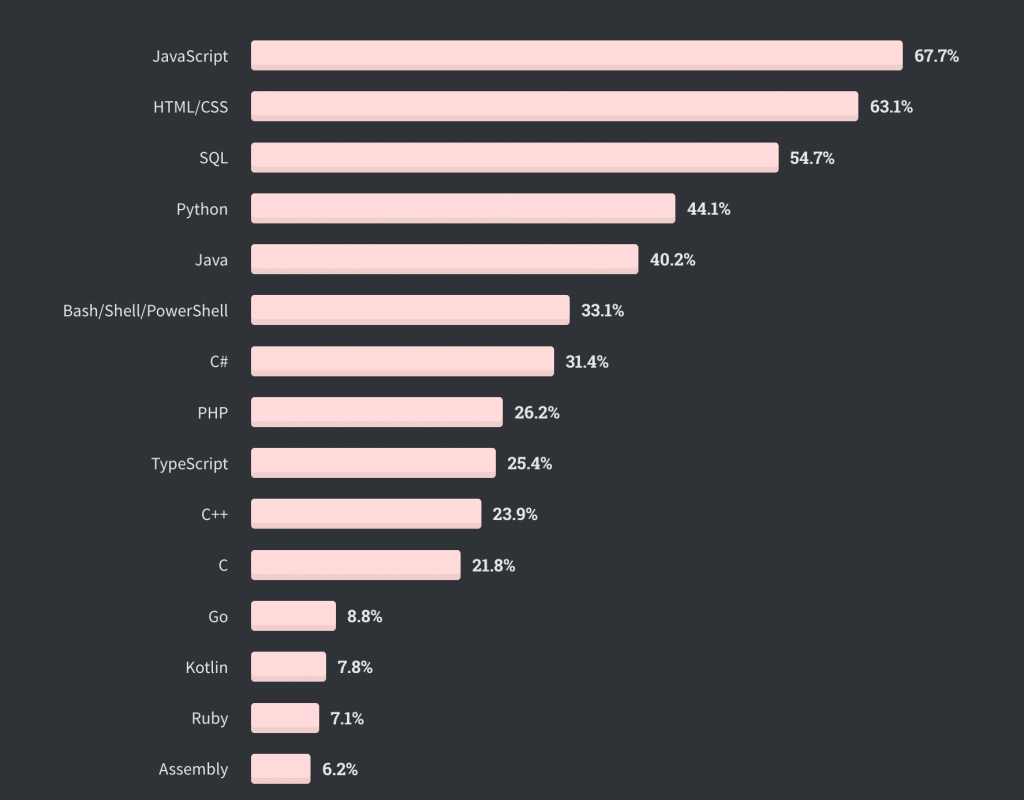
Pažvelkite į naujausią "Stack OverFlow" paskelbtą populiariausių technologijų reitingą. 2020 m. "Ruby" užėmė tik keturioliktą vietą. Palyginti su 2019 m., tai yra dviem pozicijomis mažiau (8,4% prieš 7,1% populiarumo).
Išvados
Ruby, kaip ir bet kuri kita programavimo kalba, turi savo stipriųjų ir silpnųjų pusių. Be to, Ruby on Rails yra vienas geriausių galinių žiniatinklio kūrimas pagrindus, kuriuos galite apsvarstyti kitam projektas. Šiuos žodžius patvirtina įmonės, kurios naudojo šią kalbą ir jos "Rails" sistemą savo produktams kurti. Tai, be kita ko, "Twitter", "Basecamp", "Groupon", "Airbnb" ar "Shopify".
Galiausiai verta paminėti, kad Ruby, kurioje daugiausia dėmesio skiriama sparti plėtra ir būti į objektus orientuota kalba, nuolat tobulinamas, o naujos šio leidinio versijos programavimo kalba rodomi reguliariai. Tai neabejotinai daro teigiamą poveikį jos ateities potencialo ir patrauklumo suvokimui, ypač lyginant su kitos programavimo kalbos. Ruby"stiprybė žiniatinklio kūrimas, kurį sustiprino Ruby ant bėgių sistema, naudojasi aktyvi bendruomenė kuris padeda išlaikyti geriausi pramonės standartai svetainėje Ruby. Šie standartai užtikrina, kad Ruby išlieka geriausiu pasirinkimu kuriant patikimus ir efektyvius programinė įranga, ypač kai reikia naudoti Modelis-Vaizdas-Kontroleris (MVC) architektūra žiniatinklio karkasai.
Tinklalapiui Ruby on Rails (RoR) kūrėjai siekdami įsitraukti į greitas programų kūrimas, Ruby pasižymi unikaliu paprastumo ir galios deriniu, todėl idealiai tinka tiek pradedančiosioms, tiek įsitvirtinusioms įmonėms, siekiančioms sukurti aukštos kokybės, keičiamo dydžio žiniatinklio programos. Jo gebėjimas integruotis su kitos kalbos ir technologijos dar labiau padidina jo universalumą. Jei kuriate savo nuosavą programinę įrangą ir siekdami patenkinti pramonės standartai, Ruby, nuolat evoliucionuojantis ir stiprus bendruomenė parama, yra puikus pasirinkimas.
Jei kiltų klausimų dėl geriausias kodas praktika arba sparti plėtra strategijas, galite kreiptis į The Codest įgula, kad galėtumėte pasikonsultuoti dėl savo abejonių. Jų patirtis programinės įrangos kūrimas, įskaitant Ruby, užtikrina, kad jie yra gerai pasirengę teikti rekomendacijas ir paramą derinant jūsų projektus su naujausiomis technologijų pramonės tendencijomis ir standartais.
 Lithuanian
  English
  German
  Swedish
  Danish
  Norwegian
  Finnish
  French
  Polish
  Arabic
  Italian
  Spanish
  Dutch
Dutch  Estonian
  Greek
Greek  Portuguese
  Czech
Czech  Latvian